

-


Please consider a donation to help support the BudgetBunny website!
Why Hay?
The majority of your rabbits diet should consist of hay. Rabbits have very complex, delicate systems and an extremely long digestive tract. A diet high in fiber ensures that their digestive system functions properly to stay strong and healthy. Hay also provides many of the nutrients, vitamins and minerals that a rabbit needs in their daily diet. Hay also keeps those continuously growing teeth worn down, particularly the back molars, which is something that feeding pellets alone can’t do. As rabbits lack the ability to throw up, hay also helps to break down blockages like hairballs and allows them to safely pass through their system. It is therefore important that fresh hay is fed in unlimited amounts.
How Much Do I Feed?
Hay should always be available to your rabbit.
What Kind Of Hay Can I Feed?
There are a wide variety of hays that are available to your rabbit. Timothy and meadow hay are the most popular but you can also feed oat, orchard and Bermuda grass occasionally as well. Mixing different hays together can provide variety for your rabbit and make their hay more interesting!
Unless you have a rabbit under the age of 6 months, please avoid alfalfa hay. Alfalfa hay is safe for young, growing bunnies and pregnant or nursing rabbits. Due to it’s high calcium and protein levels but low fiber content it is not suitable for adult rabbits and can cause health problems including bladder stones and sludge.
Find out more about the importance of hay here.
Why Vegetables?
A wide range of vegetables add a variety of flavours to your rabbits palate as well as providing an assortment of vitamins, nutrients and minerals necessary to your rabbit’s well being. Many vegetables and herbs would also be items rabbits would find and eat in the wild. Fresh vegetables also provide your rabbit with additional hydration due to their higher water content.
How Much Do I Feed?
It is important to introduce any new foods gradually. You can begin introducing your rabbit to fresh foods around the age of 3-4 months. Herbs have a strong and enticing odor and are generally gentler on a baby rabbit’s stomach so I suggest beginning with these.
Start by giving only a small amount of veg per night to see if your rabbit tolerates it well. If your rabbit has loose, runny poos or seems gassy, discontinue feeding. Eventually you will be able to tell what your rabbit likes, what it doesn’t and what it does or doesn’t tolerate.
If your rabbit’s stomach is not bothered by vegetables you can feed 1-2 cups daily. You will know that you’re feeding too much or that your rabbit doesn’t like a particular type of vegetable if your rabbit leaves some of his veg behind.
What Kind Of Vegetables Can I Feed?
A varied diet is key however some vegetables should be fed in limited amounts, some are fine on a regular basis and some should be avoided all together. Dark leafy greens are considered the best to give your rabbit.
Safe Vegetables & Herbs:
Dill
Swiss Chard
Romaine Lettuce
Collard Greens
Coriander
Red/Green Leaf Lettuce
Bok Choy
Carrot Tops
Arugula
Feed In Limited Amounts:
Parsley
Kale
Spinach
Unsafe Vegetables:
Potato
Avocado
Eggplant
Onions/Leeks
Growing your own vegetables or purchasing organic foods is always recommended, however if these aren’t available to you make sure to thoroughly wash your veggies before feeding to your rabbit.
You can learn more about vegetables and your rabbit here.
Why Pellets?
Pellets are an assurance that your rabbit’s daily diet contains all of the vitamins, minerals and nutrients it needs however they should make up a very small amount of your rabbit’s diet since they are higher in sugars. When given in unlimited amounts many rabbits tend to ignore the healthier food options also available to them. Many rabbit owners opt to feed their rabbits a pellet-less diet but added care needs to be taken to ensure your rabbit’s weight and nutrient requirements are still being met. If you are interested in going pellet-less I would suggest talking to your vet.
How Much Do I Feed?
The general rule is 1/8-1/4 cup of pellets given daily for every 5lbs of rabbit however you may need to adjust depending on age, size, health, amount of exercise your rabbit gets and coat length. Too many pellets in your rabbit’s diet can cause health problems such as obesity and sludge as well as teeth problems as only hay can wear down a bunny’s back molars. Weekly weigh-ins will also determine if your rabbit is gaining or losing weight. If you need to reduce or increase your rabbits pellet intake please do so gradually. If you are concerned about your rabbit’s weight please speak with your rabbit savvy vet.
What Kind Of Pellets Can I Feed?
If your rabbit is under 6 months of age or pregnant or nursing then alfalfa based pellets can be fed. Similarly elderly, ill or rabbits recovering from surgery or illness may be required to eat alfalfa based pellets as they are higher in calories.
Healthy adult rabbits should be fed timothy based pellets.
When choosing pellets please pick one that has a fibre content that is 18% or higher, a fat content that is no more than 5% and a protein content that doesn’t exceed 15%. We love Martin Mill’s Timothy Based Pellets at our house!
Many brands offer muesli mixes that also include bits of corn, seeds and other sugary treats. Please avoid these at all costs. Not only are they not healthy for your rabbit, but they are higher in sugars and can lead to obesity and other health problems. Your rabbit can easily become addicted to these types of foods and refuse to eat anything else!
Fresh water should also be available at all times of the day for your rabbit. Rabbits consume more water per body weight than any other animal and it is therefore essential that they get enough to drink. Water bowls provide easier access for your rabbit to drink out of but some people still prefer a water bottle. Others give their rabbit the option, providing both a water bowl and water bottle for their bunny. Either way please change the water at least once or twice a day and clean bowls and bottles once daily to ensure the water is as clean as possible.
Remember that any store bought treat is junk food to a bunny. If you are going to feed any of these treats to your rabbit please do so sparingly. Also avoid any treats that say they are rabbit safe but contain any kind of dairy such as yogurt drops. Rabbits are strict herbivores and dairy isn’t part of their natural diet.
The best treat to give your bunny is fruit. These are sweet due to their sugar content but still a healthier option then shop bought treats. Once in a while a teaspoon of fresh fruit will have your bunny delighted. As with vegetables try to stick to the organic section of the grocery store and wash thoroughly before feeding to your rabbit.
Safe Fruits To Feed Your Rabbit Include:
Banana
Apple (not the seeds)
Pear (not the pit)
Watermelon
My rabbits rarely get treats as I find they are so excited for their nightly vegetables it doesn’t seem necessary.
Please do not give your rabbit any type of human junk food. Cookies, crackers, pizza and chips are extremely unhealthy for a rabbit and could cause your rabbit to become very sick. Chocolate is toxic to rabbits.
Providing fresh or dried forage is becoming more and more popular with rabbit lovers. The theory to picking wild plants and feeding them to your rabbit is that this more closely mimics what your rabbit would consume in the wild. These also provide many nutrients, vitamins and minerals that your rabbit needs in order to stay healthy.
Please be careful where you pick! Your backyard is a great place to start as long as you don’t use any pesticides, fertilizers or have larger pets such as dogs that use the backyard as their toilet. Don’t choose public areas like parks, which are usually maintained by cities and treated regularly with pesticides. Roadsides are also not ideal due to gas emissions. Also be certain that what you are picking is safe for your rabbit. Pet rabbits have been domesticated over a long period of time which means they may lack the ability to identify safe and unsafe plants.
Safe Forage:
Fresh grass clippings (not from a lawn mower)
Dandelion
Smooth Sow Thistle
Wild Chamomile
Apple (except apple seeds)
Willow
Hawthorne
Bramble (Blackberry Bush)
Plantain
Coltsfoot
Unsafe Forage:
Lily of the Valley
Horse Chestnut
Snowdrop
Hemlock
Foxglove
Pigweed
Buttercup
Yew
Any type of bulb plant such as tulips, day lilies and tiger lilies
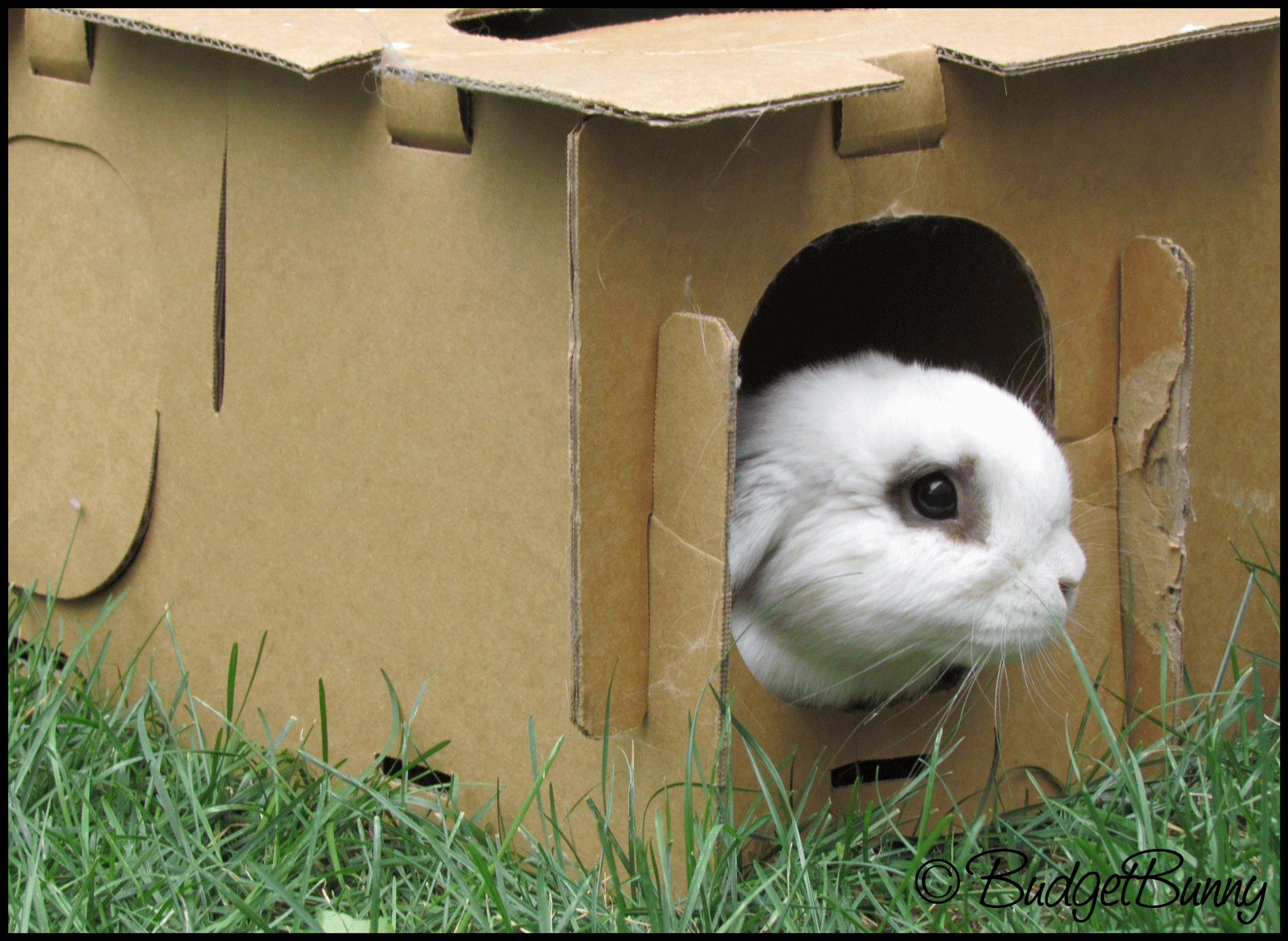
The bunnies love playing in their Maze Haven! Ollie loves to play hide and seek in the intricate tunnel system.
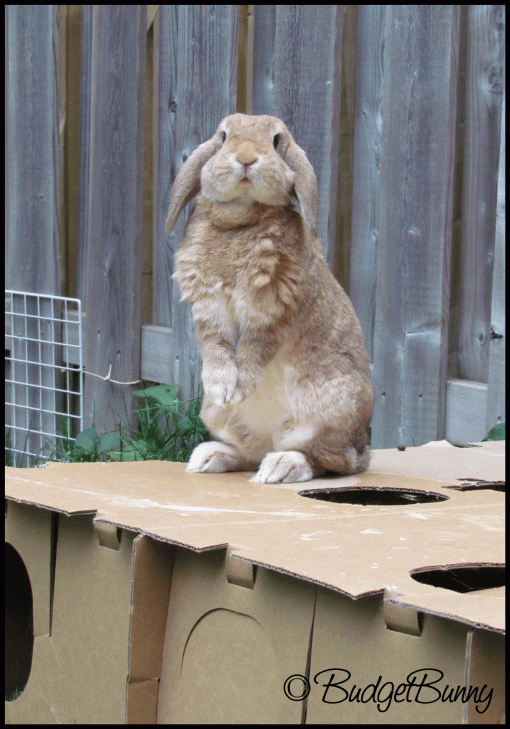
Honey prefers to be on official bun business – periscoping the area for danger.

Willow uses the holes in the top to surprise her enemy.

And Rocky just does what his wifey bun tells him to do! Hoppy Monday!

Submitted By: Allison
This 1 year old Holland Lop’s name is Shoshana. Shoshana was trying to beat the summer heat when Allison snapped this photo. Shoshana loves parsley and checking herself out in the mirror! She is a regular diva!
Thanks Allison!
For more sweet rabbit photos check us out on Facebook!
Want your rabbit to be Bunday Sunday’s featured Bun? E-mail your pics to info@budgetbunny.ca!
Please read our disclaimer under Submissions before sending us your photos!

 After cleaning out the cages this morning I found I had a lot of its and bits left over from old toys. In the rabbits’ toy box I also had quite a few toys with predrilled holes in them or things that could easily be hung on string. I decided to take some of these toys and create new toys from them. This is a great way to reuse those odd pieces that get left behind, generate new interest from toys your rabbit has grown bored with and provide enrichment for your rabbit.
Materials:
Cost:
Assembly:

Begin by cutting your string to the desired length. Keep in mind you’ll want some extra to form a loop at the top (so that you can hang your toy from a hook if desired) and to create a thick knot at the bottom. Next make a loop at the top of your string and knot it a few times to secure it.

Now add your desired toys.

Finish by tying a secure knot at the base of the toy.

I also had a rectangular wood block that had two predrilled holes in it. Originally it had various pieces hanging from it that Honey had chewed apart a long time ago. I slid the string through the holes and added the toys on so they would hang off either side of the base.
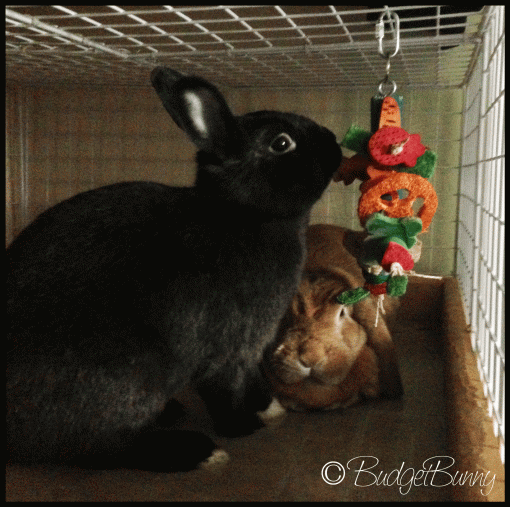
With all of the spare pieces I had from leftover toys I was able to make three new toys that hang from the tops of the rabbit’s cages as well as a garland of chews for our hamster. The rabbits were so excited about their ‘new’ toys they immediately began knocking them around and nibbling on the different bits. Success!
Question:
Do you recommend a water bowl or a water bottle for rabbits?
L.
Answer:
This has become quite a debate with many rabbit owners! Here are some things to consider for both:
Many people argue that a water bottle keeps your rabbit’s water clean whereas a water bowl leaves the water out in the open, free for dust, dirt, bugs and loose hair to collect in it. Your rabbit could then consume these leading to illness or blockages. Although this could happen, regular cleaning of your bowls and grooming of your rabbit especially in peak shedding season would make this highly unlikely. Please keep in mind that water bottles do build up bacteria and scum rather quickly and should still be thoroughly cleaned once a day. Water bowls should be emptied in the morning and night, given a quick rinse and scrub and filled with fresh water.
Nature did not intend rabbits to consume their water from a bottle. Rabbits drink more water per pound of body weight then any other mammal and a water bowl allows them to consume their water easily. I also find that my rabbits like to soak their chins and paws in the water and groom themselves with it!
Water bottles are also susceptible to leaks. If you are going to use a water bottle I would suggest testing it thoroughly first. There’s nothing worse then finding your rabbit sopping wet after a water bottle leaked out all night! This could also cause permanent damage to your cage depending on what materials you’ve built it with. Similarly the same problem arises from a knocked over water dish. If you plan on using a bowl please consider buying a large, heavy ceramic one and placing it in a corner of the cage. This will be harder for your rabbit to move and knock over, reducing the chance of it being tipped over by a naughty bunny.
Another reason people prefer water bottles over a water dish is because they don’t take up any extra space in their rabbit’s cage. The HRS recommends that your rabbit not be housed in a pen smaller than that in which your rabbit can hop 3 times from one end to the other. They recommend nothing smaller than an ex-pen. With this being said the amount of space the bowl takes up should be minimal compared to the cage size.
I have tried both over the years and prefer a water bowl. Although I don’t encourage people to house their rabbits outdoors if you do, then I think a water bottle would indeed be better as it would definitely keep your rabbit’s water cleaner for longer. In the end I think which you choose to use is up to you as only you know what’s best for you and your rabbit.
1. Rabbits are a big commitment with many living past 10 years of age. Where will you be in 10 years?
2. Rabbits teeth are always growing. They can grow up to 5 inches every year! Unlimited hay and lots of natural wood toys will encourage chewing to keep those pearly whites worn down!

3. Rabbits are extremely social animals, make great house pets and do best with a companion.
4. Rabbits love to play! They love to nibble and toss their toys and are renovation specialists when given a cardboard box!
5. A male rabbit is called a buck, a female is called a doe and a baby is called a kit.
6. Rabbits are crepuscular which means they are most active at dawn and dusk – perfect if you go to school or work during the day and are home in the mornings and evenings!
7. Rabbits are prey animals. This means they generally don’t like to be picked up and often hide symptoms of illness until it’s too late. If you notice your rabbit hasn’t been eating, drinking, pooping or has any kind of behavioural changes please call your vet!
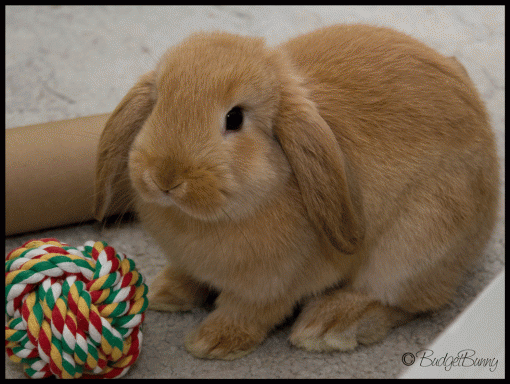
8. The English Lop has the largest ears – measuring around 2ft in length!
9. Rabbits are lagomorphs, not rodents. One characteristic of lagomorphs is the ability to produce two types of feces – one for expelling waste and the other known as cecotropes, which they reingest to ensure maximum nutrient absorption from their food.
10. Rabbits are unable to throw up.
11. Wire mesh is the worst flooring to house your rabbit on. It can cause deformities, sore hocks and other painful foot ailments.
12. Rabbits should be spayed or neutered. When rabbits reach sexual maturity their hormones begin dictating their actions. Grunting, humping, lunging, marking their territory, cage aggression, boxing and nipping are all common unfixed bunny behaviours. Another reason to spay your females? As many as 75% of unspayed females will develop uterine cancer between the age of 2 and 5.

13. When rabbits jump in the air, twist and kick their heels, it is called a binky.
14. Rabbits are herbivores and should be given access to fresh water and unlimited hay at all times. Their diet should also include a small amount of pellets and fresh vegetables, herbs and/or forage daily.
15. Rabbits, especially those neutered and spayed, can be litter trained.
16. Rabbits require a minimum of 3 hours of free range floor time on a daily basis. The more the better! When they aren’t out playing they should be housed in a pen that allows them to hop at least 3 times from one end of their cage to the other and allow them to stand upright on their hind legs. Additional levels also help keep those back leg muscles good and strong.
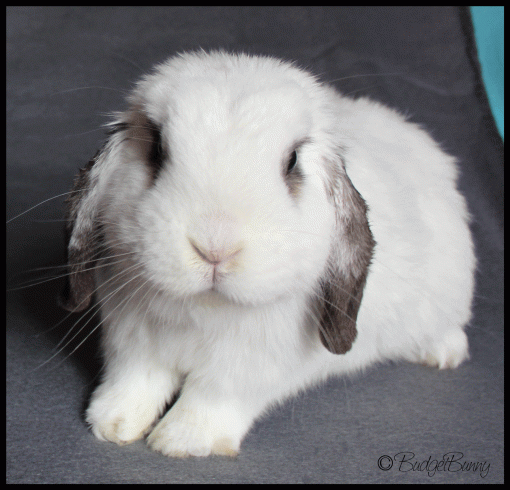
17. A rabbit’s heart beat is 130-135 beats per minute! The normal resting human heart rate can be as low as 60!
18. Rabbits regulate their body temperature through their ears. Lop eared rabbits have a harder time regulating their temperature then rabbit’s who’s ears are erect.
19. When rabbits are content they will grind their teeth together making a purring noise.
20. Rabbits are the third most abandoned animal at shelters. Please adopt, don’t shop.
With the final quarter of the year quickly approaching, I got to thinking about how quickly time flies. This of course got me thinking about the bunnies! Before I knew it I was hunting through my photos and swooning over how adorable my four were as itty bitty babies!

Rocky is 5 1/2 now but in this photo he was only about 4 months old! He actually loved this cat toy which I had completely forgotten about. Rocky is my first rabbit and I remember bursting in to laughter the first time he binkied! I had no idea what these silly kicks and flips were, having never owned a rabbit before. He made me want to be the best rabbit owner which in turn has led me to educating so many others with my channel and blog.

Ollie has always reminded me of a plush toy and was just the cutest baby bunny! We used to call him half-a-lop because for the longest time he had an ear that stood upright and another that flopped down! He’s always preferred lounging and a good cuddle with me over floor time although he loves spending his day trying to catch his swift partner, Willow.

How could anyone say no to those giant doe-like eyes? Willow has always been my little speed demon! Even at such a young age she loved to run laps, do binkies and flop around the house. When she was really tiny she would do a huge binky in excitement which would cause her to fall over because of how itty bitty she was.

And finally there’s Honey. The youngest of our brigade but the bun with the biggest attitude. We used to call her Pudge all the time because she was nothing more than this little round ball of fluff. Even at a young age, Honey let you know when she was displeased by giving a loud thump when you did something she disapproved of. To this day she still stomps around when I do things she hates, like being in her presence for example.

Submitted By: Johanna
This is Bruiser who was destined to become a snake’s meal due to his malocclusion before Johanna intervened. He will be having dental surgery soon to fix his teeth but in the meantime Johanna says it gives him character to his already growing personality!
Thanks Johanna!
For more sweet rabbit photos check us out on Facebook!
Want your rabbit to be Bunday Sunday’s featured Bun? E-mail your pics to info@budgetbunny.ca!
Please read our disclaimer under Submissions before sending us your photos!
|
|